
East Africa, North Africa, West Africa Growth SME Climate-smart agricultural value chains, Food Security and Nutrition, LivelihoodsARAF II
Country / Region :
East, West, North Africa
Asset class :
Growth SME
Year of creation :
2026
Year of FASA investment :
2026
Target close :
$120M
Target portfolio :
20 agri-SMEs
Investment ticket sizes :
from $500k to $5M
About the Fund
Acumen Resilient Agriculture Fund II (or ARAF II), managed by Acumen Capital Partners, is a blended finance impact fund focused on climate resilience and food security in Africa. It invests in agricultural businesses that support smallholder farmers and strengthen agricultural value chains across East, West and North Africa. It is the successor fund to ARAF I — a $58M fund launched in 2019 that invested in 14 agri-SMEs and reached over 3 million farmers.
ARAF II deploys a mix of equity, quasi-equity and self-liquidating instruments — financing tools designed to match the longer growth cycles typical of agricultural businesses — into a portfolio of up to 20 agri-SMEs, with initial tickets averaging $3M and the ability to follow on in high-performing companies.
The Fund focuses on three areas within the agricultural sector: aggregator platforms that connect farmers to inputs, markets and services; digital platforms with the reach to serve large numbers of smallholders; and innovative financial solutions that improve access to credit and risk management for farmers. In all cases, ARAF II favours companies that offer bundled services — combining, for example, inputs, training and market access — to create deeper and more lasting impact.
ARAF II is one of the very few funds solely focused on agriculture and climate resilience across East, West and North Africa, a positioning that gives it a strong competitive edge in a continent where dedicated agricultural expertise among investors remains scarce.
FASA’s investment and added value
FASA commits $8M in junior equity — disbursed in two tranches — alongside anchor investor the Green Climate Fund (GCF) and four DFIs: Proparco, FMO, Swedfund and BIO.
FASA’s investment plays a decisive role at this stage of the fund’s development, strengthening the fund’s junior equity tranche.
FASA also provides technical assistance, focused on gender-specific initiatives at the agri-SME level.
Why FASA invested?
→ Investing in a 100% agri-specific fund that addresses all three of FASA’s core impact themes at once: food security and nutrition, smallholder farmer livelihoods, and climate-smart agricultural value chains.
→ Backing a team with a demonstrated track record — ARAF I deployed $39M across 14 companies, reached 3M farmers and met its investment target a year ahead of schedule.
→ Backing the geographic expansion – extending the fund’s reach from five core countries (Kenya, Uganda, Tanzania, Nigeria and Ghana) into five new markets (Côte d’Ivoire, Egypt, Morocco, Ethiopia and Senegal).
→ Supporting a fund that blends different financing instruments — equity, quasi-equity and self-liquidating tools — alongside capacity building and technical assistance, tailored to the realities of high-growth agri-SMEs.
→ A clear example of blended finance at work: public and concessional capital enabling a first close that can attract and de-risk additional private investment.
Expected Impact
-
 Enhancing food security & nutrition
-
 Improving livelihoods
-
 Promoting climate-smart agricultural value chains
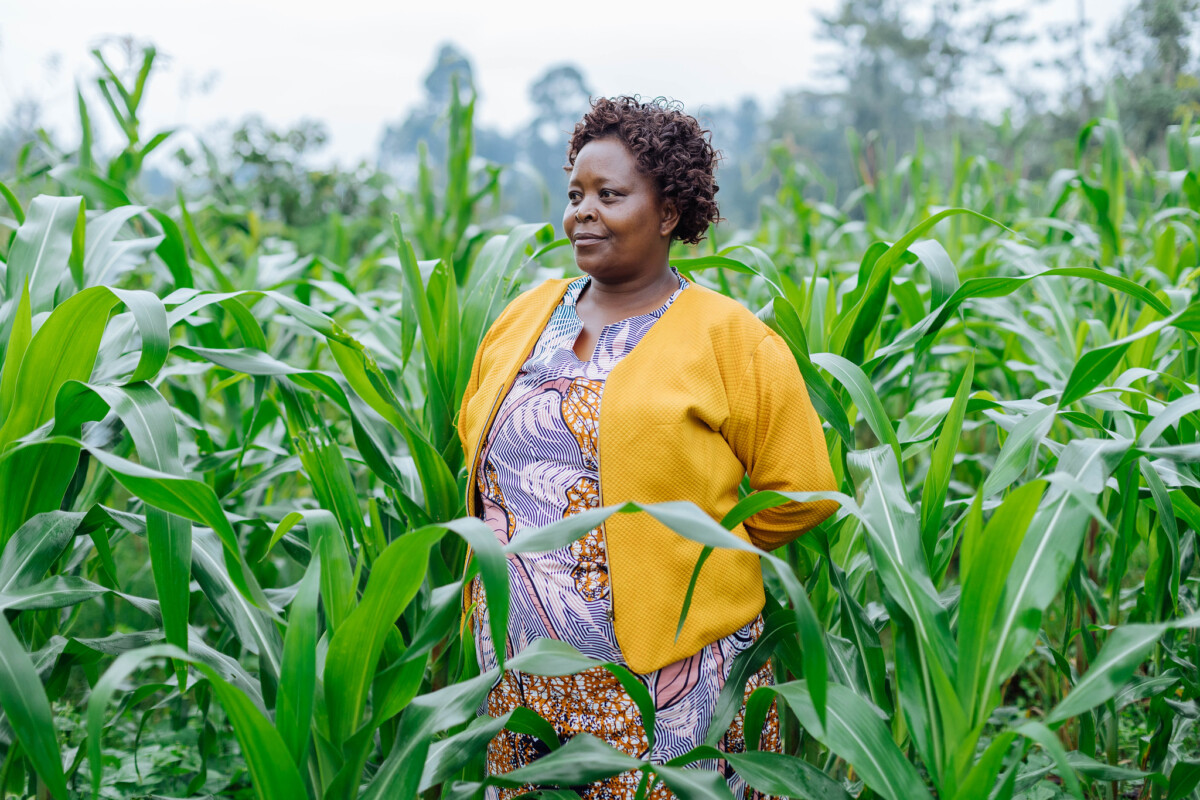
ARAF II largely surpasses FASA’s expected impact on livelihoods by reaching 4 million smallholder farmers and by creating or maintaining 77,000 jobs at the USD 120M fund size and over the full 10-year fund life. ARAF II combines large scale outreach with deeper support for farmers mainly through the aggregator platforms. For example, a Ghana-based input-credit platform digitizes farmer profiles for banks, arranging input loans while monitoring production and coordinating off-take and loan repayment.
Smallholder farmer impact is a core investment criterion for both ARAF I and ARAF II as all portfolio companies must demonstrate business models that promote farmers’ financial and environmental sustainability.
Food security and nutrition
As ARAF II plans to focus the majority of its investments on aggregator platforms that increases food supply, the Fund has a good likelihood to meet FASA’s year 5 target of 70% . For instance, in the pipeline a Nigeria-based cassava processor transforms cassava into food-grade starch, flour, and garri through in- and out-grower schemes, operating processing lines with capacities of 20 t/day for starch, 30 t/day for flour, and 7 t/day for garri, alongside an animal-feed production line.
Climate-smart agricultural solutions
Through the three models, the fund’s agri-SMEs have the potential to contribute to this impact theme by providing goods or services that address climate-related challenges. In the pipeline, an Egypt-based agri-food manufacturer operates an out-grower model built on sustainable, organic crop growing across the value chain, generating carbon credits from fully developed trees and sustainable agricultural techniques.
Fund management
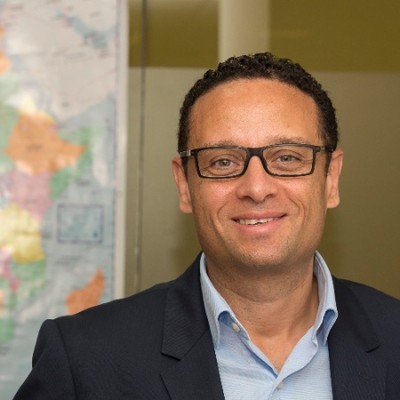
ARAF II is led by Tamer El-Raghy and Rebecca Mincy, who have both been involved since the inception of ARAF I, and will respectively assume the roles of Senior Partner and Partner.
They are supported by an experienced team with a proven track record of deploying ARAF I, with deep on-the-ground presence in Kenya, Nigeria, Côte d’Ivoire, Egypt and soon Morocco.
Tamer El-Raghy
Tamer El-Raghy brings 20 years of experience in venture capital, private equity, M&A and entrepreneurship across Africa, the US and Europe. He previously led Cargill’s growth strategy and M&A, and managed responsAbility’s agricultural private equity activities in Africa.

Rebecca Mincy
Rebecca Mincy has ten years of experience in agriculture, impact investing and asset management, including seven years leading direct investments in the agribusiness sector in East Africa. She holds an MBA from Columbia Business School and a BA from Stanford University.