

 Beyond building a portfolio of funds, FASA is committed to advancing sector knowledge through a dedicated learning strategy.
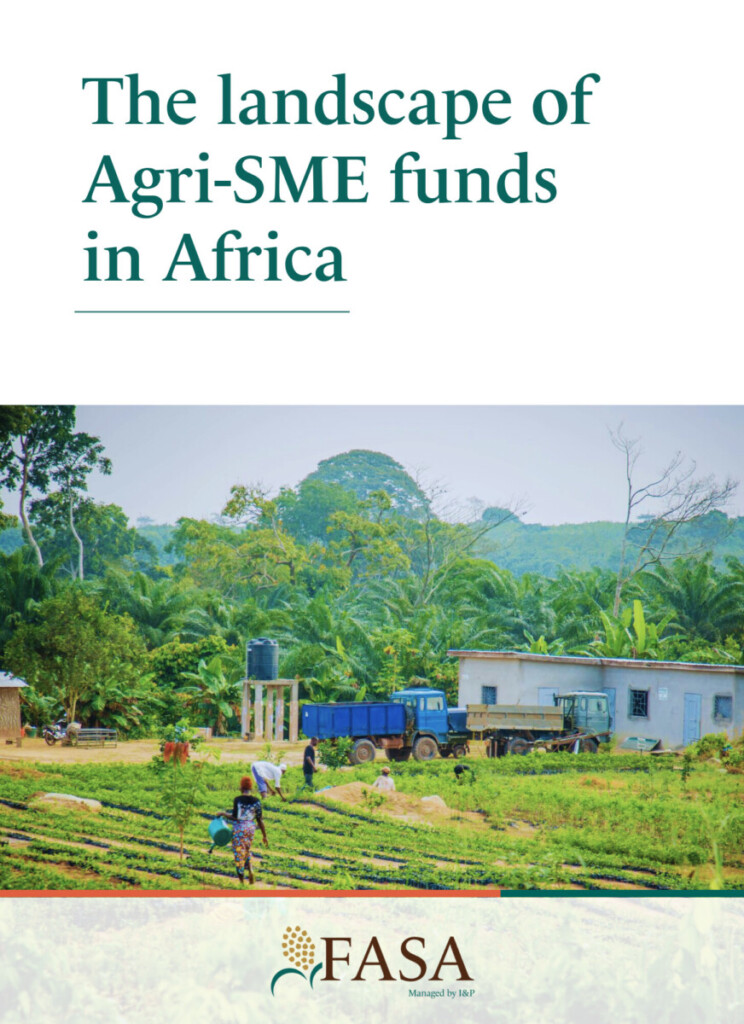
Today, FASA is publishing its first major research report: “The Landscape of Agri-SME Funds in Africa”. This comprehensive study provides an up-to-date panorama of 175 agri-SME funds across the continent, offering novel insights and sizing the immense opportunity for funders to drive impact.
The mapping reveals the transformations at work in the ecosystem
With the financing gap for African agri-SMEs estimated at $75 billion, the lack of reliable data has long hindered effective capital allocation. This report addresses that challenge by analyzing 79 data points for each of the 175 funds identified—covering both fully raised funds and those currently fundraising. The result is a forward-looking view of a market in transformation.
The study highlights the rise of a new generation of funds that is reshaping agricultural investment:
→ Africa-based teams: 66% of new funds are managed by Africa-based teams, a significant shift from the 21% seen in the previous generation
→ Targeting the “Missing Middle”: these funds are deploying smaller tickets and entering at earlier stages. Specifically, 59% of capital from new funds targets tickets below $2 million, addressing the critical financing gap for growing businesses
→ Embedded Impact: impact is central to these funds’ strategies – with Livelihoods (56%) and Climate (54%) standing out as core strategic themes.
Key takeaways for funders
Building on this landscape, the second half of the report translates these market trends into a clear message for funders: the most additional segments of the market are also the ones that face the hardest access to finance.
With $4.6 billion still needed to fully capitalize this new generation of funds, the report outlines seven strategic recommendations for donors. Key actions include:
→ Prioritizing additionality, adjusting approaches to back first-time fund managers, supporting the scale and replications of catalytic capital and TA platforms as well as the unlocking of new pools of investor capital, and aligning technical assistance budgets with actual enterprise needs rather than fund size.
→ Supporting local currency investments in food security, which can be achieved by supporting smaller, early-stage equity funds mobilizing African capital to deploy more capital to agri-SMEs, and creating sustainable FX hedging solutions for agri-specific pan-African funds
→ Deep research and data gaps remain to mobilise more capital and design efficient interventions, including: the realized additionality and impact of agri-SME funds based on portfolio data; the challenges and expectations of fund investors/LPs to invest in the sector; the risk and financial performance of existing agri-SME funds, as well as key success factors; and the comparative efficiency of interventions that blended finance and catalytic capital can take to support the sector.
A commitment to learning
For FASA, generating knowledge is just as critical as deploying capital. This report marks the launch of a dedicated learning agenda designed to bring more transparency to a fragmented market.
As stated by Anders Aabo, Senior Adviser at Norad and Chair of the FASA Steering Committee,
“Our work is not just about deploying more capital; it is about making capital work better. This report is the first of a series of publications to help us all understand the sector better. My ask to policy makers and stakeholders is simple: prioritize transparency and data sharing to design better, more tailored approaches to financing agri-SMEs.”
We invite you to read the full analysis and join us in building a more evidence-based future for African agri-finance.